YaAlef 2.0.0
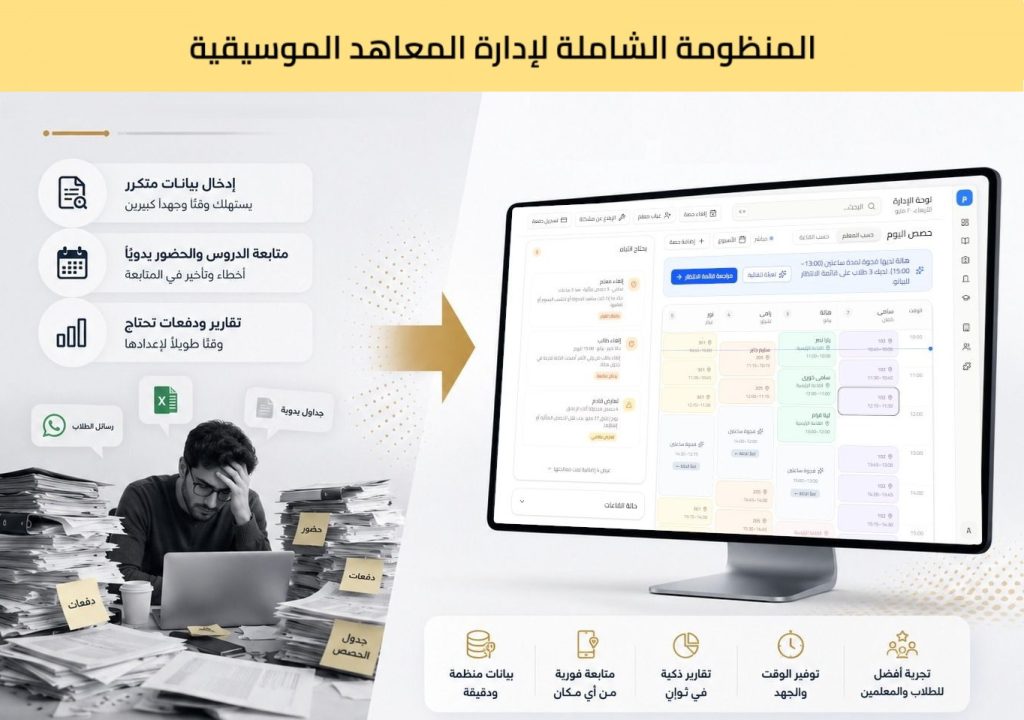
A modern web-based system designed for music academies, conservatories, and educational music institutions. The system helps management teams organize students, teachers, lessons, attendance, payments, reports, rooms, and daily administrative work in one professional platform.
Key Features:
- Organization & academic setup: organizations, organization switching, setup/readiness workflow, permissions, organization timezone, Main Term/sub-terms, working days/hours, term exceptions, scheduling settings, and multilingual/RTL operation.
- People & relationships: students, guardians, teachers, employees, large searchable people lists, guardian relationships, copying guardians between siblings, identity/contact details, profile pictures, and people import workflows.
- Subjects & course catalogue: subject catalogue separated from actual teaching, course variants, course-specific commercial/scheduling properties, default course fees, naming/renaming courses, and course configuration.
- Registrations: student registration into course variants, assigned teachers, payment contracts, scheduling from registration, registration lifecycle/end participation, group vs. private participation behavior, and preservation of historical/financial records when participation ends.
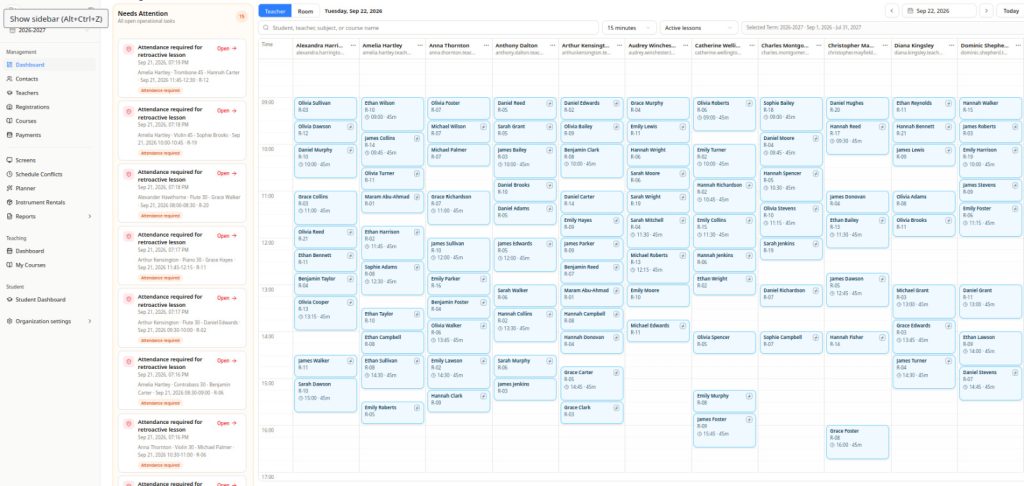
- Private & group course scheduling: multi-stage private scheduling, teacher availability/committed times, weekly scheduling, rooms, conflict validation, term restrictions, course lesson counts, manual lesson addition, moving/swapping lessons, teacher/room changes, and modified-lesson indicators.
- Lesson lifecycle: active lessons, cancellation/reactivation, rescheduling, course cancellation, preserving cancelled lesson history while removing it from the operational calendar, availability/conflict release, and course/lesson detail views.
- Make-up lessons: make-up requests and a dedicated scheduling workflow using the original lesson, same-time future opportunities, teacher availability, freed cancellation slots, room validation, and manual fallback scheduling.
- Teacher App: mobile-oriented dashboard, Today/Week views, attendance entry, missing-attendance alerts, lesson notes, lesson opening/details, restricted cancellation permissions, localization/RTL, and teacher schedule interactions.
- Attendance: per-student attendance for groups, attendance states, prevention of future attendance entry, missing-attendance tracking, teacher completion monitoring, and management reporting.
- Teacher agreements & workload: teacher contracts, Main-Term-derived dates, committed weekly slots with multiple ranges, teacher availability, and teacher salary reporting.
- Finance & payments: registration payment contracts, commitments, course-variant default fees, payment-plan concepts, searchable commitments, partial payments, one payment across multiple commitments, multiple payment methods, multiple cheques, payer-name suggestions, allocation handling, returned cheques/failed transactions, effective outstanding balances, payment voiding, and unofficial payment PDFs.
- Management reporting: student balances, teacher salaries, management summary KPIs, collection rate, outstanding/overdue amounts, attendance and cancellation rates, teacher activity, student/teacher rankings, lesson operations, registrations/course metrics, and “Needs Attention” indicators.
- Notifications: PWA/mobile push infrastructure, multiple devices per user, localized notifications, deep links, lesson cancellation/reactivation, rescheduling, room/teacher changes, new/make-up lessons, and grouped notifications for bulk course operations.
- Lesson contact access: lazy-loaded contact information directly from Lesson Details for student, guardians, and teacher, with clickable phone/email values and permission enforcement.
- Rooms: room management, capacity/details/accessibility information, room scheduling, room weekly views, and room conflict checking.
- Instrument rentals: a dedicated instrument rental management module with instrument/request/rental-related workflows.
- Dashboard & displays: operational dashboard/day views, large-screen/TV optimization, paired displays, display management, compact lesson cards, and responsive schedule behavior.
- Localization & accessibility of the UI: Arabic/Hebrew RTL, English/German localization, proper direction inheritance, date formatting, translated reports, mobile/tablet/PWA optimization, and safer/less intimidating destructive-action UX.